THERE are times when a song is so fucking good that you lose your cool.
Those of us with refined tastes are supposed to know better than this, of course. We're supposed to acknowledge, with a cool shrug, that there is no such thing as perfect in music - there hasn't been anything worthwhile to happen in music since the 70s. And even then, music fucking sucked.
Sure, when we were kids songs on the radio would absolutely tear us into the stratosphere; they would captivate us, leaving us bug-eyed with dazzled wonderment at how incredible that whole music thing can be. But we're adults now, for Pete's sake, and adults are belabored and crusty with extreme amounts of cynicism. Those days of glowing ebullience are (supposed to be) forever extinguished.
And anyway, in adult world the cooler you are the less that you actually like music, right? After all, what distinguishes pitchfork or cokemachineglow from Rolling Stone, if not higher levels of disdain for mediocrity? Make no mistake, we are never to enjoy music, under any circumstances.
And yet, it happens nonetheless. A certain cadence, or melody, or vocal delivery just grabs you and forces you back to a child-like state. At that moment, you forget to be objective. You forget all of the words to criticize, or how to examine a song's flaws - all of those cognitive processes are thrown offline. For a brief instant, anything other than the beautiful music that swirls around you is immediately forgotten - and when it's really intense, a feeling of incredible, euphoric awe goes creeping warmly across your entire being.
Once you find songs like these, they become your special treasure. You keep them locked up for the tenderest of moments, in some untouched playlist or folder (or shoebox, if you're old fashioned). You hide them from friends, coworkers, siblings, parents - even girlfriends, boyfriends, husbands and wives - and if the song is played, at a party or by someone in your proximity by accident, you ignore its effects, hoping the person next to you won't notice the glaze that has suddenly rolled across your eye. These songs feel like little parts of you, broken off and sealed up in some sublime moment you (and only you) get to relieve again and again, exactly as you remember.
Here are a few songs that have such an effect on yours truly:
Talk Show Host (Radiohead)
Rebellion(Lies) (Arcade Fire)
Unravel (Bjork)
Life on Mars? (David Bowie)
Walking Wounded (Everything but the Girl)
Sunday, October 19, 2008

Friday, October 17, 2008
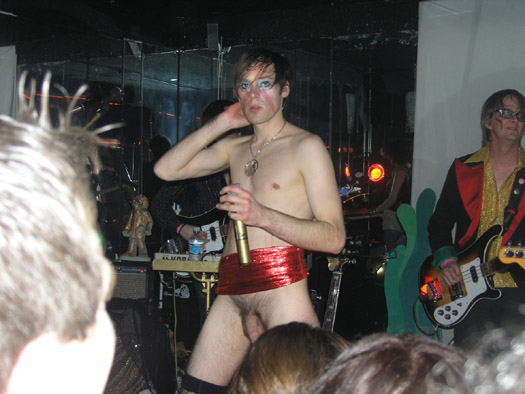
ALBUM REVIEWS: Skeletal Lamping

(certainly the gayest thing you will see on this blog.)
Oh, Of Montreal. How the mighty have fallen. And by fallen, I mean fallen upward. And by falling upward, I mean released a new album that's insanely listenable yet alienating, sexy, determinedly unique and a fucking lot of fun.
For those of you who didn't know, Kevin Barnes wanted to use this record to expand upon musical and lyrical conventions - to take music, and specifically, Of Montreal, to uncharted territory. As a result, the transitions on this album are as copious as they are drastic; there are, for example, six to eight transitions within the first track. This may sound like the makings of an album that overreaches itself, or tries to hard to obtain a gimmick while forgetting about sounding like worthwhile music. Somehow, you are wrong.
Although the motif of schizophrenia remains a constant throughout the work, Of Montreal keep it all together. Their near-autistic bouncing from one musical idea to the next kind of works, when its coupled with the lyrical subject matter of a black shemale soul/funk singer named Georgie Fruit.
Which brings me to the most appealing aspect of Skeltal Lamping; its unbelievably funky sensibilities. Kevin Barnes sounds like Sly Stone, George Clinton, and David Bowie crammed in a blender and pasteurized with scraps of older Of Montreal. It's funky, it's fresh, and its wholly unlike anything around (outside of the aforementioned older Of Montreal, that is).
Lyrically, this is the most overtly sexual Of Montreal has ever been. Barnes' writing style has shifted away from personal and towards kitschy, tongue in cheek dirty talk. It's all in the name of fun and good humor, and done so in a catch-phrase-y kind of way (I'm not sure what a 'Big Cock Creator' is, but it may have something to do with this (NSFW)).
Yet there are times when Barnes' meandering wanders outside of coherency. Every now and then, the ever shifting musical terrain proves to be disorientating. This album has an intense case of ADD, which works to both harm and help the work as a whole. As I've already said, the constant shifting makes for intriguing pop art - but there are times that it jerks out of sync right when the band has locked into a groove, and it leaves you wondering why they didn't just stick with the last three well written melodies and time signatures.
But a surplus of catchy, funky musical ideas could never be a total deal breaker, especially for me. And again, when it works, it's positively brilliant. And more to the point, Of Montreal have been doing this short-attention-span thing since their last record, so you sort of sign up for that with the price of admission. All in all, I'd say Skeletal Lamping has a few sparse flaws, but overall stands out as one of the best records of the year.
PROS:It's funky, It's crammed full of great songs with countless great segments.
CONS: It can become disorientating, and it may scare away homophobes.
ARTISTRY/PRETENSION: 7/10
LIKABILITY/DIRECT APPEAL: 6/10
OVERALL RATING: 9/10
Monday, October 13, 2008
Nothing can stop me now: Why The Downward Spiral is (one of) the best albums ever
It begins with a punch.
It jars you, immediately setting you ill at ease. There is a crackle of soundtrack - you realize that you're listening to silence in another room, from another day. There are tiny clicks as the album revolves in your stereo - tiny barbs blooming soft in the mix, drawing your attention in. Another bludgeon - this time, generating a human groan. You hear background noises, out of focus. What sounds like chatter...you realize is a plea for help. A guttural, wordless appeal to mercy is cut short by yet another hit
- and another -
and another. The punches land mechanically, plodding a sort of rhythm that accelerates into a steady pulse. Those guttural moans are now shouts of pain - any words drowned out by those deafening hits. The tempo of this visceral display of audio violence nears breakneck speed. It all feels as if the whole sample could careen into oblivion at any second...and then it does, hurdling you into a nightmarish soundscape of white noise.
This is how The Downward Spiral begins.
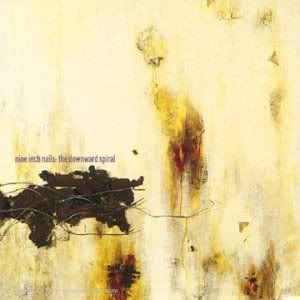
Every second of music on this album retains the tension established within those first few moments. This is one of those rare kinds of records that stands out as truly artistic, authentic and original - one that directly references its creator's influences (Ministry, David Bowie) yet stands out as decidedly unique. Although Spiral produced a single highly popular in the Pop music scene - one that endures constant radio rotation even to this day - this album is decidedly anti-pop. The Downward Spiral is as conceptually diverse as it is aesthetically textured; while every one of these fourteen songs develop Reznor's lyrical vision of a man driven to madness, they all also reflect the artist's incredible attention to sonic detail and nuance. It is, by my estimation and for all intents and purposes, a perfect album.
The speeding locomotive of the album opener (Mr. Self Destruct) combusts in a supernova of static carnage - and in its wake softly croons the blithely nihilistic 'Piggy'. Although not exactly renown for lyrical adroitness, here Reznor delivers his prose straight from the heart; in doing so, he avoids giving the work too pretentious of a vibe and generates a vulnerable human contrast to the album's alienating coldness. When Reznor's protagonist is not shamelessly self-abasing and vulnerable (Mr. Self Destruct, The Becoming, Ruiner, I Do Not Want This, Hurt) he abandons himself unto the embrace of sexual oblivion (Closer, Reptile, Big Man With A Gun). Each wring down the spiral reveals another level of this character's dementia, and we are drawn closer step by step to his inevitable tragedy - be it interpreted as suicide (as the title track suggests) or meek helplessness (Hurt). Reznor is at one moment resolved in his abandoment - "Nothing can stop me now/ 'cause I don't care anymore" - and, in the other, nearly crippled by it ("there's no escape from this/ my new consciousness"). Reznor's outbursts of hopelessness and demand for meaning (I want to do something/That matters) are replaced by deviant lust and severe nihilism ("I want to fuck you like an animal", "smash me/ erase me").
However Spiral's lyrics are not merely self referential - the album is rife with references (both musical and literary). 'Heresy' spouts Nietzsche-influenced caterwauls while the album's only instrumental (A Warm Place) borrows directly from David Bowie's 'Crystal Japan'. Pigs are everywhere in this record, which could either be a reference to Golding's Symbolic Pig from Lord of the Flies or Charles Manson (Reznor recorded Spiral in the Tate murder mansion, after all.)
Musically, the record plays off of the relationship between loud and soft (much as, thematically, it plays off of light and darkness, purity and abasement). While the more visceral tracks are awash with distortion and the lighter tracks seem ethereally weightless, every song on the album (no matter it's mood) is crammed with layers. If there has ever been an album tailor made for headphones, it's The Downward Spiral; tiny noises, sound effects, samples, and musical phrases are scattered all across Spiral's terrain. This gives the record a haunted quality - as if, at any given moment, there's something hidden lurking just beneath the surface, buried deeply in the mix.
Spiral touches upon the darkest hues of human emotion. It spurns, it soothes, it affirms, it denies. At the album's end, we are left in a very similar state of how we began. As 'Hurt' creeps to its somber close, a jarring chord sounds out of nowhere, shattering the song's cadence and with it, our reflective reverie. The chord is left lingering atop the mix for an eternity, as if to say (as Bret Easton Ellis's serial killer Patrick Bateman asserted in American Psycho) "This confession has meant nothing." Well, maybe it didn't, but this thrashing, heaving mess of postmodernism has remained over the years as my favorite record of all time, and certainly one of the greatest albums ever made. I recommend it to anyone who's ever had a bad day (or, for that matter, a good lay).
It jars you, immediately setting you ill at ease. There is a crackle of soundtrack - you realize that you're listening to silence in another room, from another day. There are tiny clicks as the album revolves in your stereo - tiny barbs blooming soft in the mix, drawing your attention in. Another bludgeon - this time, generating a human groan. You hear background noises, out of focus. What sounds like chatter...you realize is a plea for help. A guttural, wordless appeal to mercy is cut short by yet another hit
- and another -
and another. The punches land mechanically, plodding a sort of rhythm that accelerates into a steady pulse. Those guttural moans are now shouts of pain - any words drowned out by those deafening hits. The tempo of this visceral display of audio violence nears breakneck speed. It all feels as if the whole sample could careen into oblivion at any second...and then it does, hurdling you into a nightmarish soundscape of white noise.
This is how The Downward Spiral begins.
Every second of music on this album retains the tension established within those first few moments. This is one of those rare kinds of records that stands out as truly artistic, authentic and original - one that directly references its creator's influences (Ministry, David Bowie) yet stands out as decidedly unique. Although Spiral produced a single highly popular in the Pop music scene - one that endures constant radio rotation even to this day - this album is decidedly anti-pop. The Downward Spiral is as conceptually diverse as it is aesthetically textured; while every one of these fourteen songs develop Reznor's lyrical vision of a man driven to madness, they all also reflect the artist's incredible attention to sonic detail and nuance. It is, by my estimation and for all intents and purposes, a perfect album.
The speeding locomotive of the album opener (Mr. Self Destruct) combusts in a supernova of static carnage - and in its wake softly croons the blithely nihilistic 'Piggy'. Although not exactly renown for lyrical adroitness, here Reznor delivers his prose straight from the heart; in doing so, he avoids giving the work too pretentious of a vibe and generates a vulnerable human contrast to the album's alienating coldness. When Reznor's protagonist is not shamelessly self-abasing and vulnerable (Mr. Self Destruct, The Becoming, Ruiner, I Do Not Want This, Hurt) he abandons himself unto the embrace of sexual oblivion (Closer, Reptile, Big Man With A Gun). Each wring down the spiral reveals another level of this character's dementia, and we are drawn closer step by step to his inevitable tragedy - be it interpreted as suicide (as the title track suggests) or meek helplessness (Hurt). Reznor is at one moment resolved in his abandoment - "Nothing can stop me now/ 'cause I don't care anymore" - and, in the other, nearly crippled by it ("there's no escape from this/ my new consciousness"). Reznor's outbursts of hopelessness and demand for meaning (I want to do something/That matters) are replaced by deviant lust and severe nihilism ("I want to fuck you like an animal", "smash me/ erase me").
However Spiral's lyrics are not merely self referential - the album is rife with references (both musical and literary). 'Heresy' spouts Nietzsche-influenced caterwauls while the album's only instrumental (A Warm Place) borrows directly from David Bowie's 'Crystal Japan'. Pigs are everywhere in this record, which could either be a reference to Golding's Symbolic Pig from Lord of the Flies or Charles Manson (Reznor recorded Spiral in the Tate murder mansion, after all.)
Musically, the record plays off of the relationship between loud and soft (much as, thematically, it plays off of light and darkness, purity and abasement). While the more visceral tracks are awash with distortion and the lighter tracks seem ethereally weightless, every song on the album (no matter it's mood) is crammed with layers. If there has ever been an album tailor made for headphones, it's The Downward Spiral; tiny noises, sound effects, samples, and musical phrases are scattered all across Spiral's terrain. This gives the record a haunted quality - as if, at any given moment, there's something hidden lurking just beneath the surface, buried deeply in the mix.
Spiral touches upon the darkest hues of human emotion. It spurns, it soothes, it affirms, it denies. At the album's end, we are left in a very similar state of how we began. As 'Hurt' creeps to its somber close, a jarring chord sounds out of nowhere, shattering the song's cadence and with it, our reflective reverie. The chord is left lingering atop the mix for an eternity, as if to say (as Bret Easton Ellis's serial killer Patrick Bateman asserted in American Psycho) "This confession has meant nothing." Well, maybe it didn't, but this thrashing, heaving mess of postmodernism has remained over the years as my favorite record of all time, and certainly one of the greatest albums ever made. I recommend it to anyone who's ever had a bad day (or, for that matter, a good lay).
Friday, October 10, 2008
On dissonance
This essay concerns itself with ugliness.
Before there was pop music and before there was even harmony, music was entirely mathematical. For the first hundred or so years of music, artistry and ingenuity meant next to nothing to composers. The priority of the day was, first and foremost, the numerical structure of a piece's progression. The 'rules of music' were seen as gifts from God, and seeing as the only people who could read or write music were members of the clergy, very little deviation was allowed or even considered. The intense neurological effects of musical cadences were (like many things at the time) attributed mainly to the majesty and beauty of God's universe, and (for a little while) music was simply a tool of praise. And even after music became more secular, a similar attitude remained; it isn't what you play, its how closely you stick to the rules.
Thankfully, over time this outlook dissipated. Throughout the Baroque and Classical eras, the rules of tonality and music began to expand - and as such, dilute. By the Romantic era, adherence to music's basic principals was no longer a concern. Composers embraced the artistic and emotional aspects of their art, writing pieces that resolved to irregular cadences and inventing new techniques (secondary dominance, Neapolitan chords, et al) to satisfy their desires to make music as pleasing to the ear and to the heart as possible.
What's more, by the turn of the century, many composers rejected tonality altogether - these early 20th century writers embraced the Avant-garde, and with it, dissonance. From that point, music become wholly an art form. John Cage and a few Polish and French composers (Penderecki, Messiaen, to name a few) began experimenting with Serialism, 'texturing' their instruments, and other really out there techniques. Music, it seemed, had come full circle - from championing the order of tonality to flat out rejecting it.
But then, rock n' roll happened, and the world of music started all over.
Abandoning almost everything of its jazz roots, rock music was inordinately simple - just as the extremely alienating music of the early 20th century borrowed thematically from Anarchy, rock n roll was wholeheartedly populist. It offered to its listener a directly understandable, processable product that anyone could understand. It was only proper, then, that rock music of the time offered little lyrical depth.
And let's not forget that rock n roll's first wave of popularity (the 1950s) marked (in America, anyway) a sharp increase in attention by corporations towards the teenager. The teenager is easily swayable, self serious, and entirely shallow. It was easy for the music business to pick up on upcoming trends within this demographic, and capitalize for a big buck. The music which became popular reflected the stereotypes of its market audience - shallow, vapid, fun to dance to but lacking of any artistry or sincerity.
And then, three things happened that had extensive and direct roles in the subject of this essay, all of which were directly related.
1) The 1960s happened
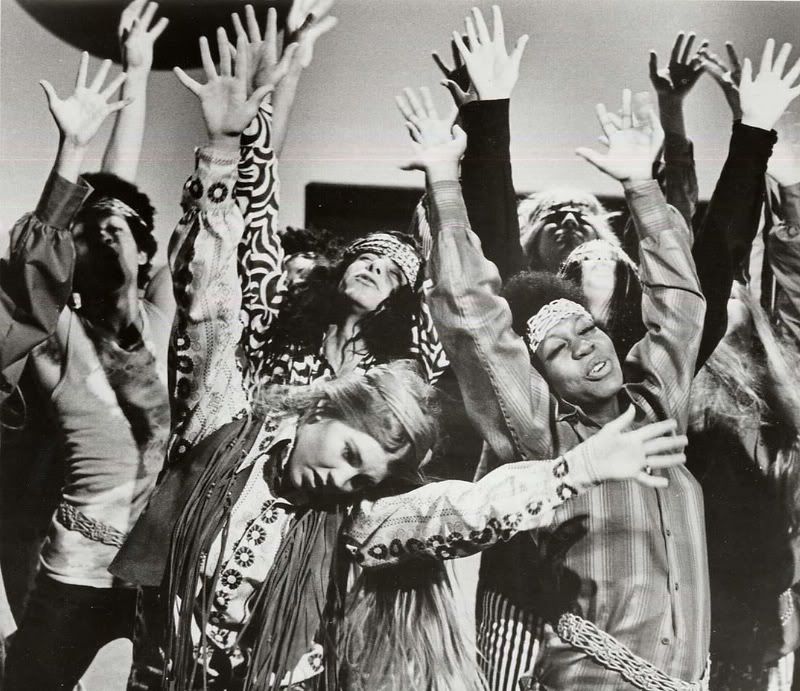
The 60s marked intense social change across the world. The stereotyped pop songs of the 50s were no longer successful, as the teens of the world became more diverse, opinionated, and involved in scenes both musical and otherwise that the corporate world was unable to keep up.
2) Bob Dylan happened
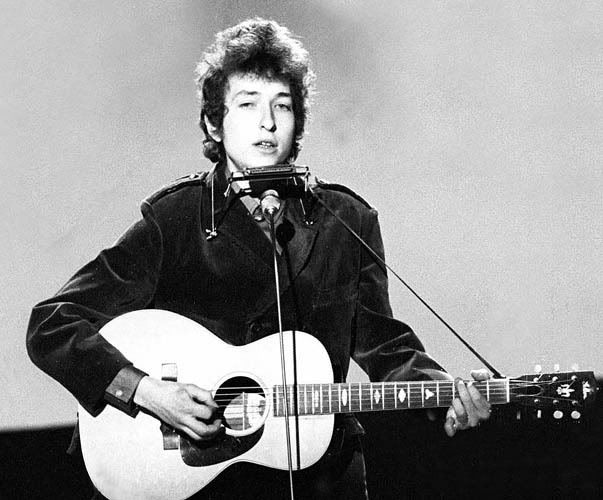
Bob Dylan was the first real and recognizable artist in pop music. He wrote songs with real depth, with social and political ramifications unheard of in pop. Dylan's music referenced blues and country, yet sounded fresh and new.
and 3) The Velvet Underground happened
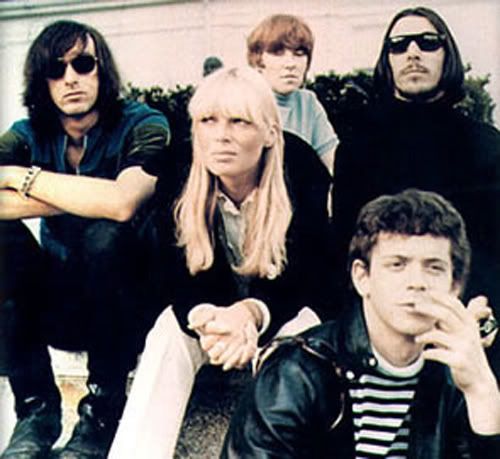
These folks were the start of it all. (Well, them and The Fugs, actually.) The Velvet Underground embraced the Advant-Garde, and were one of the first bands EVER to incorporate that beautiful, horrifying technique into pop.
The technique I'm talking about is, of course, dissonance; when a musician plays two tones together that startle our brain - when notes that conventionally don't belong together are made to sound with one another, held together to create intense waves of tension, repulsion. Exposure to this sort of music leads the mind to an inescapable conclusion; that nothing can be taken for granted. That every rule it's ever been taught can be reversed - can be obliterated, ignored, and replaced. In the Velvet Underground's debut album, this technique was first introduced to the world; with it, the seeds for Punk were lain.
It's not pretty - it's anti-beauty, if anything. It doesn't resolve, it doesn't lend the ear peace of mind and clarity, or calm (as music was expected to do for several thousand years). It doesn't affirm God's beauty or majesty, or validate any pretense of conventionality. It undermines all of those things. When generated by a feedbacking guitar, it undermines the conventionality of rock music, as well. Dissonance knows no rules or boundaries - it is pure unmitigated anarchy. With its ear shattering volume and intensity, dissonant music (noise rock and its various cousins) drives a stake into the heart of all things pedestrian and ordinary.
And what, I ask, could be more artistic than that?
Before there was pop music and before there was even harmony, music was entirely mathematical. For the first hundred or so years of music, artistry and ingenuity meant next to nothing to composers. The priority of the day was, first and foremost, the numerical structure of a piece's progression. The 'rules of music' were seen as gifts from God, and seeing as the only people who could read or write music were members of the clergy, very little deviation was allowed or even considered. The intense neurological effects of musical cadences were (like many things at the time) attributed mainly to the majesty and beauty of God's universe, and (for a little while) music was simply a tool of praise. And even after music became more secular, a similar attitude remained; it isn't what you play, its how closely you stick to the rules.
Thankfully, over time this outlook dissipated. Throughout the Baroque and Classical eras, the rules of tonality and music began to expand - and as such, dilute. By the Romantic era, adherence to music's basic principals was no longer a concern. Composers embraced the artistic and emotional aspects of their art, writing pieces that resolved to irregular cadences and inventing new techniques (secondary dominance, Neapolitan chords, et al) to satisfy their desires to make music as pleasing to the ear and to the heart as possible.
What's more, by the turn of the century, many composers rejected tonality altogether - these early 20th century writers embraced the Avant-garde, and with it, dissonance. From that point, music become wholly an art form. John Cage and a few Polish and French composers (Penderecki, Messiaen, to name a few) began experimenting with Serialism, 'texturing' their instruments, and other really out there techniques. Music, it seemed, had come full circle - from championing the order of tonality to flat out rejecting it.
But then, rock n' roll happened, and the world of music started all over.
Abandoning almost everything of its jazz roots, rock music was inordinately simple - just as the extremely alienating music of the early 20th century borrowed thematically from Anarchy, rock n roll was wholeheartedly populist. It offered to its listener a directly understandable, processable product that anyone could understand. It was only proper, then, that rock music of the time offered little lyrical depth.
And let's not forget that rock n roll's first wave of popularity (the 1950s) marked (in America, anyway) a sharp increase in attention by corporations towards the teenager. The teenager is easily swayable, self serious, and entirely shallow. It was easy for the music business to pick up on upcoming trends within this demographic, and capitalize for a big buck. The music which became popular reflected the stereotypes of its market audience - shallow, vapid, fun to dance to but lacking of any artistry or sincerity.
And then, three things happened that had extensive and direct roles in the subject of this essay, all of which were directly related.
1) The 1960s happened
The 60s marked intense social change across the world. The stereotyped pop songs of the 50s were no longer successful, as the teens of the world became more diverse, opinionated, and involved in scenes both musical and otherwise that the corporate world was unable to keep up.
2) Bob Dylan happened
Bob Dylan was the first real and recognizable artist in pop music. He wrote songs with real depth, with social and political ramifications unheard of in pop. Dylan's music referenced blues and country, yet sounded fresh and new.
and 3) The Velvet Underground happened
These folks were the start of it all. (Well, them and The Fugs, actually.) The Velvet Underground embraced the Advant-Garde, and were one of the first bands EVER to incorporate that beautiful, horrifying technique into pop.
The technique I'm talking about is, of course, dissonance; when a musician plays two tones together that startle our brain - when notes that conventionally don't belong together are made to sound with one another, held together to create intense waves of tension, repulsion. Exposure to this sort of music leads the mind to an inescapable conclusion; that nothing can be taken for granted. That every rule it's ever been taught can be reversed - can be obliterated, ignored, and replaced. In the Velvet Underground's debut album, this technique was first introduced to the world; with it, the seeds for Punk were lain.
It's not pretty - it's anti-beauty, if anything. It doesn't resolve, it doesn't lend the ear peace of mind and clarity, or calm (as music was expected to do for several thousand years). It doesn't affirm God's beauty or majesty, or validate any pretense of conventionality. It undermines all of those things. When generated by a feedbacking guitar, it undermines the conventionality of rock music, as well. Dissonance knows no rules or boundaries - it is pure unmitigated anarchy. With its ear shattering volume and intensity, dissonant music (noise rock and its various cousins) drives a stake into the heart of all things pedestrian and ordinary.
And what, I ask, could be more artistic than that?
Wednesday, October 8, 2008
ALBUM REVIEWS: This Is the Sound That Crazy Makes
Typically, I do the best I can to avoid music made before 1977 that isn't already irredeemably cool. Obviously, certain genres are innocent of this embargo - Proto Punk's is, as the kids are saying, so necessary because without it, there wouldn't be a Punk (or a Post Punk for that matter!) Bands like The Stooges, The Velvet Underground and David Bowie will always, always be hip and/or relevant (at least their first few releases). And of course, the early seventies is chock full of obscure-but-great artists (The Modern Lovers, Faust, Can, the New York Dolls, etc, etc). But all of those guys and galls still fit into a similar mold - they're all pioneers, or produced by pioneers, or fans of pioneers. They all make new and exciting music.
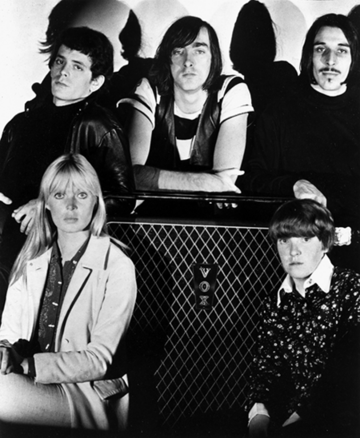
(I challenge you to listen to White Light/ White Heat and not get a bit of a music hard on).
One can trace the weight of their influences into the eighties and nineties, and even today. Most of those great bands are considered great today because, throughout the ravages of history, groups of music nerds banded together and stood by their favorite bands, hoisting their original non-re release vinyl copy of Faust IV up for the world to see, insisting upon its importance year after year after year as its imitators redirected, revamped, and rehashed its iconoclastic energy. Some people today who crank Green Day LPs have no idea that that artistic statement has already been made - thirty years ago. From the Sex Pistols! (Well, as the record store clerk Dick from 1997's brilliant snob film High Fidelity assures us, there and from Stiff Little Fingers' debut LP.) And when the Sex Pistols were huge in the late seventies, many a Briton had no clue that Malcolm McLaren plagiarized his 'idea' of children-anarchist-destroyers from across the Atlantic: from Richard Hell, and the New York Dolls, and those progenitors of a revolution.
And on it goes, the story of pop music - one plagiarism after another. But after all, it was John Lennon who told us that it's "not who you rip off, it's how you do it". And at the end of the day what's wrong with borrowing from your favorite bands? Chances are they're going to intervene in your sound, anyway. The general consensus is, let 'em in...as long as they belong there. As long as they're good, recognized as such by critic and fan alike. You'll get a hell of a lot farther impersonating Television and Gang of Four than Nickelback, that's for sure (unless, of course, you want any money; then by all means, go for Nickelback).
But who 'belongs there'? Who makes the cut, what artists rise above their worthless, prattling peers as shining examples of 'what to do' with musical instruments? As far as history's concerned, all significant influences can be traced back to their origins. The Clash were ultra important. The Velvet Underground inspired everything worthwhile (as did the Pixies, but that's a later blog). Like the Velvets and the Pixies, there are a number of bands that did no wrong - that were as perfect as perfect gets in pop music, that inspired only good groups, that wrote only the best music for as long as they were relevant. As far as the 1970s are concerned, this refers to an extremely long and diverse list.
But then there are those groups that the music community has a long history of enmity towards - that were considered so god fucking awful, it provided the original impetus for punk to rise up and sweep its bloated, rotten corpse off the foyer of public consciousness for good. I'm talking, of course, about rock n' roll. You know their names; they are the most notorious offenders, responsible for the most egregious of musical crimes. Led Zeppelin. Van Halen. Cream. Any band that toured between the years 1963 to 1975 and utilized "tasty licks" in one (or all) of their songs. The kind of bands that Cameron Crowe's Almost Famous so perfectly lampoon - bands with members who couldn't care less about art; who write songs strictly about getting laid, and the trauma of loosing a lay - or maybe songs just about the plain ole joys of rock n roll. Bands with 'groupies'. Bands with masturbatory solos, histrionic front men, stadium filling numbers you hear day in and day out on every Classic Rock station on the planet, and who mysteriously conjure the smell of bad pot on every lawn of every arena their now-skeletal authors 'rock n roll all nite' with all the sincerity of wet mops.

(I've had a bad day and I hate the fuckin' Eagles, man.)
And when it comes to rock n' roll crimes, a list of Progressive Rock groups from the early seventies reads like a Most Wanted Chart. Today Prog Rock's ornate orchestrations crackle, like old skin, with age. Genesis's once (probably) captivating excursions into the prog frontier now just sound, well, 'old'. Jethro Tull's lyrics - once intensely far out, I'm sure - are now laughably trite. When Led Zeppelin - while still respected - flirt with the Prog vangard (see: Achilles' Last Stand, Stairway to Heaven), there is no system of measurement to quantify its awfulness.
And who among their ranks is more guilty of sheer crap than that giant green fag dragon of a band, Pink Floyd? While the Punk revolution swept over Britain in the late seventies, the 'Floyd went marching blithely on, bloating to its most superfluousness while the rest of the world set out to trim the fat. And then, like the poor fat bastard who piggies himself to death in David Fincher's Se7en, Pink Floyd got so specious and over the top that they killed guitar music for an entire decade (I'm looking at you, 1979's The Wall!)
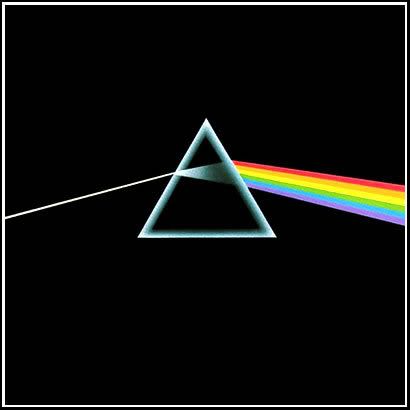
NO.
The rumor has it that, when Sid Vicious applied for a job with the Sex Pistols, he was wearing a Pink Floyd tee that the adventurous lad had carved his own commentary into; right above the large, translucent letters that spelled out the band's name, Sid had etched the words "I" and "HATE". These once harbingers of psychedelia had clearly mutated into something sinister - something boring, and up its own ass, to boot. Dark Side of the Moon may be one of the highest selling rock albums of all time, but God bless it if it ain't the worst piece of shit to come out of 1973. Humorless and entirely lacking any semblance of humility, both Dark Side... and The Wall symbolize almost everything wrong with "rock n roll" in the 70s.
BUT I'll be damned if the 'Floyd's debut isn't absolutely dazzling.

All of these people are on heavy drugs.
Before the bloat, before the gloat, and before the goat, 'The' Pink Floyd's debut album sounds (excuse the Space Rock analogy) light years away from its creators' later work. Gone are the constant daddy issues, the obsession with death and insanity and socialist politics - the twenty minute track lengths, the indulgent solos, and the flying fucking pigs. Piper at the Gates of Dawn was penned way before David 'rock out with my cock out' Gilmour ever joined the band - and in his stead (or rather, before his stead) stands tall a handsome, fashionable, black haired man with an instantly compelling voice, a way with child-like imagry, and an unbelievably out-there guitar style. This man is also BAT SHIT FUCKING NUTS. His name is (was) Syd Barrett:
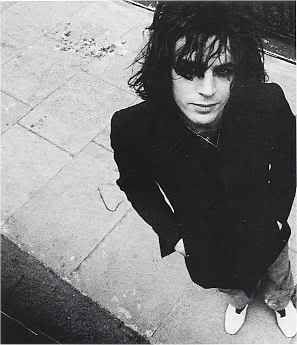
(Meet Crazy McCrazerson.)
And Syd made the band, pure and simple. The minute the sinister chromatic bass riff from Lucifer Sam creeps out of the speakers, any memory of late not-great Pink Floyd is immediately forgotten. First and foremost, Piper is scary; horrifying, in fact. A kaleidoscopic stumble through a forest in the blackest of midnights, high as a kite on LSD. And what's funny, half of the songs on the album could pass (on paper) as kid's songs. Playful lyrics, jaunty music - yet lurking behind even the twee-ness of Scarecrow lumbers the big hulking acid-soaked terror that only fully reveals itself in numbers like Pow R. Toc H. and Interstellar Overdrive (the former creaks with enough dissonance and drone guitar to make me nearly wet myself).
Syd Barrett was a mystery to all - its unclear whether or not he was even conscious of his own genius, or really anything for that matter. Stories of his madness range from mild to absurd - and it becomes difficult to remain skeptical submerged in the Psychedelic dementia that is Piper at the Gates of Dawn. An excellent, excellent album that (nearly) excuses the band from all of its later-day transgressions.
It doesn't take a genius to work out the math at play here - Pink Floyd plus Syd Barrett equals good. Pink Floyd minus Syd Barrett equals wanky. So what was good about this situation in the first place? Obviously, Syd - this higher level reasoning led me to Barrett's first (and really only mentionable) solo album, darkly and promisingly entitled The Madcap laughs. Although at the time of recording, the worst Syd stories had come to pass, and he already been kicked out of the band and replaced by Gilmour, the songs here simply do not fail to astonish.

(The Madcap laughs, indeed!)
The album rolls along with all the consistency of(ha ha ha)a schizophrenic. The slow seduction of Terrapin is banished away from the mind's eye as the album's second track, No Good Trying comes scooting across the stereo. The Madcap's lack of consistency gives the work as a whole an unstable edge, as if the whole thing might collapse together any moment. Syd ranges from quietly admiring (Terrapin) to bizarrely poetic (Golden Hair). The best of the album sound like a Who concert unplugged - the hit Octopus rambles distinctly British nonsense and demonstrates Barret's pop genius.
Yet its the fifth track - Dark Globe - that really stands out from its brothers and sisters as a true work of art. What could be meant for the members of 'Floyd, or just the entire world, this jarring acoustic track will send shivers down any spine. Here Syd is hopeless, dejected, and altogether insane; the man's neurosis on display so vividly one cannot help but feel guilty just for listening to it for entertainment purposes. The Madcap Laughs is a masterpiece, in its own right.
(I challenge you to listen to White Light/ White Heat and not get a bit of a music hard on).
One can trace the weight of their influences into the eighties and nineties, and even today. Most of those great bands are considered great today because, throughout the ravages of history, groups of music nerds banded together and stood by their favorite bands, hoisting their original non-re release vinyl copy of Faust IV up for the world to see, insisting upon its importance year after year after year as its imitators redirected, revamped, and rehashed its iconoclastic energy. Some people today who crank Green Day LPs have no idea that that artistic statement has already been made - thirty years ago. From the Sex Pistols! (Well, as the record store clerk Dick from 1997's brilliant snob film High Fidelity assures us, there and from Stiff Little Fingers' debut LP.) And when the Sex Pistols were huge in the late seventies, many a Briton had no clue that Malcolm McLaren plagiarized his 'idea' of children-anarchist-destroyers from across the Atlantic: from Richard Hell, and the New York Dolls, and those progenitors of a revolution.
And on it goes, the story of pop music - one plagiarism after another. But after all, it was John Lennon who told us that it's "not who you rip off, it's how you do it". And at the end of the day what's wrong with borrowing from your favorite bands? Chances are they're going to intervene in your sound, anyway. The general consensus is, let 'em in...as long as they belong there. As long as they're good, recognized as such by critic and fan alike. You'll get a hell of a lot farther impersonating Television and Gang of Four than Nickelback, that's for sure (unless, of course, you want any money; then by all means, go for Nickelback).
But who 'belongs there'? Who makes the cut, what artists rise above their worthless, prattling peers as shining examples of 'what to do' with musical instruments? As far as history's concerned, all significant influences can be traced back to their origins. The Clash were ultra important. The Velvet Underground inspired everything worthwhile (as did the Pixies, but that's a later blog). Like the Velvets and the Pixies, there are a number of bands that did no wrong - that were as perfect as perfect gets in pop music, that inspired only good groups, that wrote only the best music for as long as they were relevant. As far as the 1970s are concerned, this refers to an extremely long and diverse list.
But then there are those groups that the music community has a long history of enmity towards - that were considered so god fucking awful, it provided the original impetus for punk to rise up and sweep its bloated, rotten corpse off the foyer of public consciousness for good. I'm talking, of course, about rock n' roll. You know their names; they are the most notorious offenders, responsible for the most egregious of musical crimes. Led Zeppelin. Van Halen. Cream. Any band that toured between the years 1963 to 1975 and utilized "tasty licks" in one (or all) of their songs. The kind of bands that Cameron Crowe's Almost Famous so perfectly lampoon - bands with members who couldn't care less about art; who write songs strictly about getting laid, and the trauma of loosing a lay - or maybe songs just about the plain ole joys of rock n roll. Bands with 'groupies'. Bands with masturbatory solos, histrionic front men, stadium filling numbers you hear day in and day out on every Classic Rock station on the planet, and who mysteriously conjure the smell of bad pot on every lawn of every arena their now-skeletal authors 'rock n roll all nite' with all the sincerity of wet mops.
(I've had a bad day and I hate the fuckin' Eagles, man.)
And when it comes to rock n' roll crimes, a list of Progressive Rock groups from the early seventies reads like a Most Wanted Chart. Today Prog Rock's ornate orchestrations crackle, like old skin, with age. Genesis's once (probably) captivating excursions into the prog frontier now just sound, well, 'old'. Jethro Tull's lyrics - once intensely far out, I'm sure - are now laughably trite. When Led Zeppelin - while still respected - flirt with the Prog vangard (see: Achilles' Last Stand, Stairway to Heaven), there is no system of measurement to quantify its awfulness.
And who among their ranks is more guilty of sheer crap than that giant green fag dragon of a band, Pink Floyd? While the Punk revolution swept over Britain in the late seventies, the 'Floyd went marching blithely on, bloating to its most superfluousness while the rest of the world set out to trim the fat. And then, like the poor fat bastard who piggies himself to death in David Fincher's Se7en, Pink Floyd got so specious and over the top that they killed guitar music for an entire decade (I'm looking at you, 1979's The Wall!)
NO.
The rumor has it that, when Sid Vicious applied for a job with the Sex Pistols, he was wearing a Pink Floyd tee that the adventurous lad had carved his own commentary into; right above the large, translucent letters that spelled out the band's name, Sid had etched the words "I" and "HATE". These once harbingers of psychedelia had clearly mutated into something sinister - something boring, and up its own ass, to boot. Dark Side of the Moon may be one of the highest selling rock albums of all time, but God bless it if it ain't the worst piece of shit to come out of 1973. Humorless and entirely lacking any semblance of humility, both Dark Side... and The Wall symbolize almost everything wrong with "rock n roll" in the 70s.
BUT I'll be damned if the 'Floyd's debut isn't absolutely dazzling.
All of these people are on heavy drugs.
Before the bloat, before the gloat, and before the goat, 'The' Pink Floyd's debut album sounds (excuse the Space Rock analogy) light years away from its creators' later work. Gone are the constant daddy issues, the obsession with death and insanity and socialist politics - the twenty minute track lengths, the indulgent solos, and the flying fucking pigs. Piper at the Gates of Dawn was penned way before David 'rock out with my cock out' Gilmour ever joined the band - and in his stead (or rather, before his stead) stands tall a handsome, fashionable, black haired man with an instantly compelling voice, a way with child-like imagry, and an unbelievably out-there guitar style. This man is also BAT SHIT FUCKING NUTS. His name is (was) Syd Barrett:
(Meet Crazy McCrazerson.)
And Syd made the band, pure and simple. The minute the sinister chromatic bass riff from Lucifer Sam creeps out of the speakers, any memory of late not-great Pink Floyd is immediately forgotten. First and foremost, Piper is scary; horrifying, in fact. A kaleidoscopic stumble through a forest in the blackest of midnights, high as a kite on LSD. And what's funny, half of the songs on the album could pass (on paper) as kid's songs. Playful lyrics, jaunty music - yet lurking behind even the twee-ness of Scarecrow lumbers the big hulking acid-soaked terror that only fully reveals itself in numbers like Pow R. Toc H. and Interstellar Overdrive (the former creaks with enough dissonance and drone guitar to make me nearly wet myself).
Syd Barrett was a mystery to all - its unclear whether or not he was even conscious of his own genius, or really anything for that matter. Stories of his madness range from mild to absurd - and it becomes difficult to remain skeptical submerged in the Psychedelic dementia that is Piper at the Gates of Dawn. An excellent, excellent album that (nearly) excuses the band from all of its later-day transgressions.
It doesn't take a genius to work out the math at play here - Pink Floyd plus Syd Barrett equals good. Pink Floyd minus Syd Barrett equals wanky. So what was good about this situation in the first place? Obviously, Syd - this higher level reasoning led me to Barrett's first (and really only mentionable) solo album, darkly and promisingly entitled The Madcap laughs. Although at the time of recording, the worst Syd stories had come to pass, and he already been kicked out of the band and replaced by Gilmour, the songs here simply do not fail to astonish.
(The Madcap laughs, indeed!)
The album rolls along with all the consistency of(ha ha ha)a schizophrenic. The slow seduction of Terrapin is banished away from the mind's eye as the album's second track, No Good Trying comes scooting across the stereo. The Madcap's lack of consistency gives the work as a whole an unstable edge, as if the whole thing might collapse together any moment. Syd ranges from quietly admiring (Terrapin) to bizarrely poetic (Golden Hair). The best of the album sound like a Who concert unplugged - the hit Octopus rambles distinctly British nonsense and demonstrates Barret's pop genius.
Yet its the fifth track - Dark Globe - that really stands out from its brothers and sisters as a true work of art. What could be meant for the members of 'Floyd, or just the entire world, this jarring acoustic track will send shivers down any spine. Here Syd is hopeless, dejected, and altogether insane; the man's neurosis on display so vividly one cannot help but feel guilty just for listening to it for entertainment purposes. The Madcap Laughs is a masterpiece, in its own right.
Sh*t that's happened since Ike
Hello all! Sorry for the near month absence! In case you weren't aware, a giant fucking hurricane hit my city of residence and, well, as much as I wanted to fly a crop duster straight into the bastard and blog from the eye of the storm, jet fuel's just too durn expensive these days.
So let's go over whats been going on since I've been out of commission. First off, Sarah Palin:

Since I've been gone, Sarah Palin has made an idiot out of herself - a cute idiot, but an idiot none the less. Watching her 'performance' at the Veep debate last week was like watching a small child hefted slowly into a wood chipper; Horrific, yet oddly satisfying to witness. You know, the sad thing is I generally liked Palin before she opened her big dumb hot mouth. I was content tuning out whatever hairbrained ultra-conservative anti-intellectual trash would stream out of my television in unbearable droves every morning and afternoon after a Palin interview, whereupon she would, night after night, spout out more hilarious soundbytes than a hilarious soundbyte generator. Damn you Sarah Palin, I was comfortable in just being sexist and voting you into office on your good looks and winks alone - but since last week's debate I've been faced with this unshakable feeling that maybe, just maybe, there's more to public officials than being bonable. I suppose I can reserve myself to merely viewing and enjoying the Sarah Palin themed porno coming out this year. I'll wager that would be considerably less dangerous.
The Presidential debate last night was, what with its lack of Palin hotness, tedious. Barack Obama was at his usual sartorial excellence, but failed to totally sway this blogger to his side - meanwhile John McCain wandered around the stage like Sgt. Waddles at an all-you-can-eat Vietnamese buffet.
In other handsome women news, this:

and this:

Megan Fox has finally done a bikini shoot for GQ, to the joy of pervs and warm blooded men everywhere. It's difficult to shake off knowledge of Megan Fox's stupid (as demonstrated in this hilarious Jimmy Kimmel interview)but God help me if I don't do my best.
IN MUSIC:
Kayne West's new album is coming out next month, and it's entitled 808 and Heartbreak which is, uh, cool, I guess. If its first 'single' is indicative of the rest of the album's sound, it appears that Kanye has finally made a Boyz 2 Men record. Huzzah!
Also, purchase this:
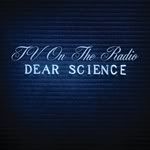
It's funky fresh, with talking points scattered all across the 'good-influences-spectrum'. I saw these guys about a year ago, and they gave a pretty badass show. There's something here for everybody.
In more music news, I'm starting a new album review section of my blog. Look for that in a little while.
Cheers,
-J
So let's go over whats been going on since I've been out of commission. First off, Sarah Palin:

Since I've been gone, Sarah Palin has made an idiot out of herself - a cute idiot, but an idiot none the less. Watching her 'performance' at the Veep debate last week was like watching a small child hefted slowly into a wood chipper; Horrific, yet oddly satisfying to witness. You know, the sad thing is I generally liked Palin before she opened her big dumb hot mouth. I was content tuning out whatever hairbrained ultra-conservative anti-intellectual trash would stream out of my television in unbearable droves every morning and afternoon after a Palin interview, whereupon she would, night after night, spout out more hilarious soundbytes than a hilarious soundbyte generator. Damn you Sarah Palin, I was comfortable in just being sexist and voting you into office on your good looks and winks alone - but since last week's debate I've been faced with this unshakable feeling that maybe, just maybe, there's more to public officials than being bonable. I suppose I can reserve myself to merely viewing and enjoying the Sarah Palin themed porno coming out this year. I'll wager that would be considerably less dangerous.
The Presidential debate last night was, what with its lack of Palin hotness, tedious. Barack Obama was at his usual sartorial excellence, but failed to totally sway this blogger to his side - meanwhile John McCain wandered around the stage like Sgt. Waddles at an all-you-can-eat Vietnamese buffet.
In other handsome women news, this:
and this:
Megan Fox has finally done a bikini shoot for GQ, to the joy of pervs and warm blooded men everywhere. It's difficult to shake off knowledge of Megan Fox's stupid (as demonstrated in this hilarious Jimmy Kimmel interview)but God help me if I don't do my best.
IN MUSIC:
Kayne West's new album is coming out next month, and it's entitled 808 and Heartbreak which is, uh, cool, I guess. If its first 'single' is indicative of the rest of the album's sound, it appears that Kanye has finally made a Boyz 2 Men record. Huzzah!
Also, purchase this:
It's funky fresh, with talking points scattered all across the 'good-influences-spectrum'. I saw these guys about a year ago, and they gave a pretty badass show. There's something here for everybody.
In more music news, I'm starting a new album review section of my blog. Look for that in a little while.
Cheers,
-J
Subscribe to:
Comments (Atom)